
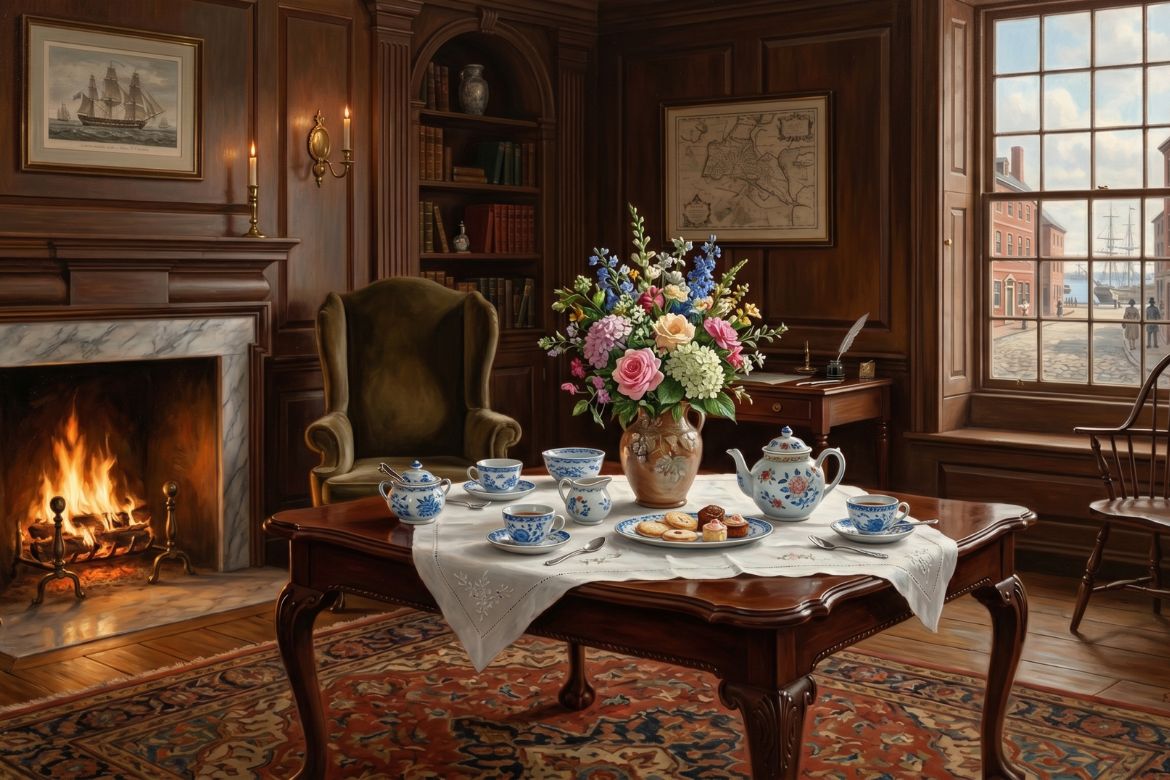
Sip history with 3 delicious teas inspired by Abigail Adams — from apple spice to apricot black tea. Perfect for history-loving tea and history lovers.
As America marks the 250th anniversary of its founding, there has never been a better time to raise a cup in honor of one of the most remarkable women of the revolutionary era. Abigail Adams was not just the wife of one president and the mother of another. She was a fierce intellectual, a political strategist, a farm manager, an investor, and a moral compass for a nation still finding its footing. And she loved her tea.
Read on to learn about three teas inspired by Abigail Adams you can drink today.
Who Was Abigail Adams?
Before we get to those teas, though, I think an introduction is in order. Born Abigail Quincy Smith in Weymouth, Massachusetts on November 11, 1744, Abigail Adams defied nearly every expectation placed on women of her era. Largely self-educated at a time when formal schooling for girls was rare, she became one of the most prolific letter writers of the American Revolution. Historians still study Abigail Adams’ letters for their insight into the colonial era, particularly its women.
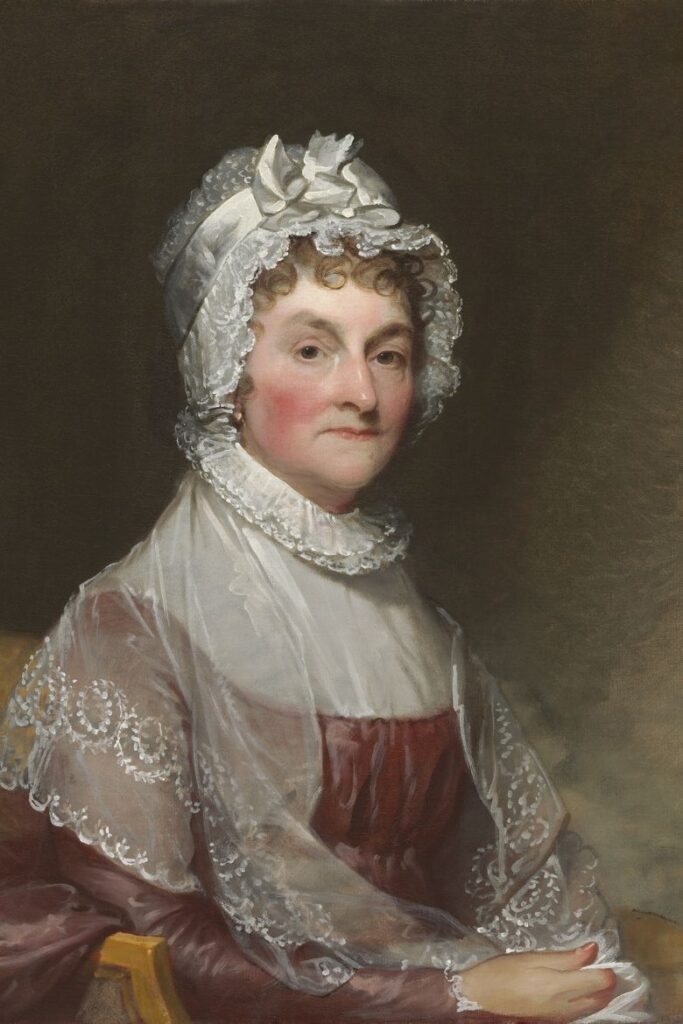
The artist Gilbert Stuart started this portrait of Abigail Adams in 1800 but didn’t finish until 1815. The painting is now part of the permanent collection in the National Gallery of Art in Washington DC. This is one of my favorite museum’s in this city!
Her most famous words came in a letter she wrote to her husband John Adams on March 31, 1776, as he prepared to help draft a new system of laws for the colonies. “Remember the Ladies,” she urged him, “and be more generous and favourable to them than your ancestors.” In addition to advocating for women, Abigail Adams was a consistent and vocal opponent of slavery at a time when many of her contemporaries were slower to condemn the institution.
If you want to go deeper into Abigail’s world, consider reading A Founding Mother: A Novel of Abigail Adams by Stephanie Dray and Laura Kamoie (William Morrow, May 2026). I just finished it and loved every page.
What Tea Did Abigail Adams Drink?
Tea was not just a beverage in colonial New England. It was a social ritual and, increasingly in the years before the American Revolution, a deeply political act.
The teas most commonly consumed in the colonies during Abigail’s era were Chinese in origin, imported by the British East India Company. Bohea, a dark, somewhat smoky black tea from China’s Fujian province, was the most widely consumed. Hyson, a green tea named for its first importer, was considered a finer and more expensive choice. Congou and souchong were also familiar names in colonial households.
Teas Inspired by Abigail Adams
Okay, enough of the history lesson (as fascinating as it is). Let’s get to the teas!
Abigail Adams Tea by Adagio Teas
Adagio Teas offers an Abigail Adams custom blend tea that is part of its American Revolution Women collection. The blend offers a black tea infused with real apple pieces and spices including cinnamon, ginger, cardamom (my personal favorite!), and cloves. It is a high-caffeine tea (great for mornings!), recommended to steep at 212 degrees for four minutes.
Adagio offers the blend in a sample tin, a 3-ounce pouch, and a 5-ounce tin, and it makes a wonderful gift for the history lover in your life. You can also bundle it with other blends from the American Revolution Women collection, including Martha Washington, Adrienne Lafayette, Lucy Knox, and Dolley Madison, for a truly revolutionary tea tasting.
This tea reminds me of Abigail Adams’ apple pan dowdy recipe for which she is famous. It’s filled with flavorful apples and delicate spices. Try some with your Abigail tea!

Abigail’s Blend by Elmwood Inn Fine Teas for the Boston Tea Party Ships & Museum
This tea is perhaps the most historically grounded of all the Abigail-inspired teas, and the story behind its creation is as interesting as the tea itself.
Abigail’s Blend was created by Bruce Richardson of Elmwood Inn Fine Teas to serve as the house tea for Abigail’s Tearoom. The tearoom, named in honor of Abigail Adams, is part of the Boston Tea Party Ships & Museum overlooking Boston harbor. The tea itself is a unique blend of quality black teas, a tribute to the tea tossed overboard during the Boston Tea Party in 1773.
Related Post: The Tea Lover’s Guide to the Boston Tea Party.
Abigail’s Blend is available as a loose leaf tea or in pyramid sachets from the Boston Tea Party Ships & Museum or Elmwood Inn Fine Teas.
Tea Tip: If you’re ever in Boston, be sure to enjoy a meal — and some tea — at Abigail’s Tearoom. Our contributing photographer Elaine Chen was recently in Boston and visited the tearoom and museum. Naturally, she brought back several teas for the rest of the team to try!

Abigail’s Apricot by Darjees Teabox Company
For something a little lighter and more floral, Abigail’s Apricot from Darjees Teabox Company is a beautiful tribute to one of America’s most important founding figures. This is a black tea blended with calendula and pieces of apricot. Note that the Adams family cultivated apricots and apples in the orchard at their home in Massachusetts.
Abigail’s Apricot is available in multiple sizes, from a loose leaf sampler to a teabox of 20 making it easy to try before committing to a larger quantity.
Summing Up: Abigail Adams and Tea
Abigail Adams spent her life doing the quiet, often unrecognized work of helping to build a new nation. She raised children, managed a farm, counseled a president, fought for women’s rights, and never stopped writing. The 250th anniversary of American independence is the perfect moment to revisit her story. These three unique teas inspired by Abigail Adams give you a wonderful way to do exactly that.
Pour yourself a cup of one of these delicious teas, pick up A Founding Mother, and remember the ladies.
Questions About Abigail Adams and Colonial Tea
Q: What is Abigail Adams most famous for?
Abigail Adams is best known for her remarkable correspondence with her husband John Adams and for her famous phrase “remember the ladies,” written in a letter urging him to give women a voice in the new nation’s laws.
The protestors destroyed a total of 342 chests containing five distinct varieties of loose Chinese tea imported by the British East India Company. The cargo consisted primarily of Bohea, Congou, and smoky Souchong (all black teas), as well as Hyson and Singlo (both green teas).
Not entirely, although she was deeply aware of tea’s political significance. Like many colonists, the Adams family navigated a complicated relationship with tea during the revolutionary years, yet tea remained a part of their household life. Abigail’s letters include a specific comment about broken and missing tea china during the move to the President’s House in Washington in 1800.
